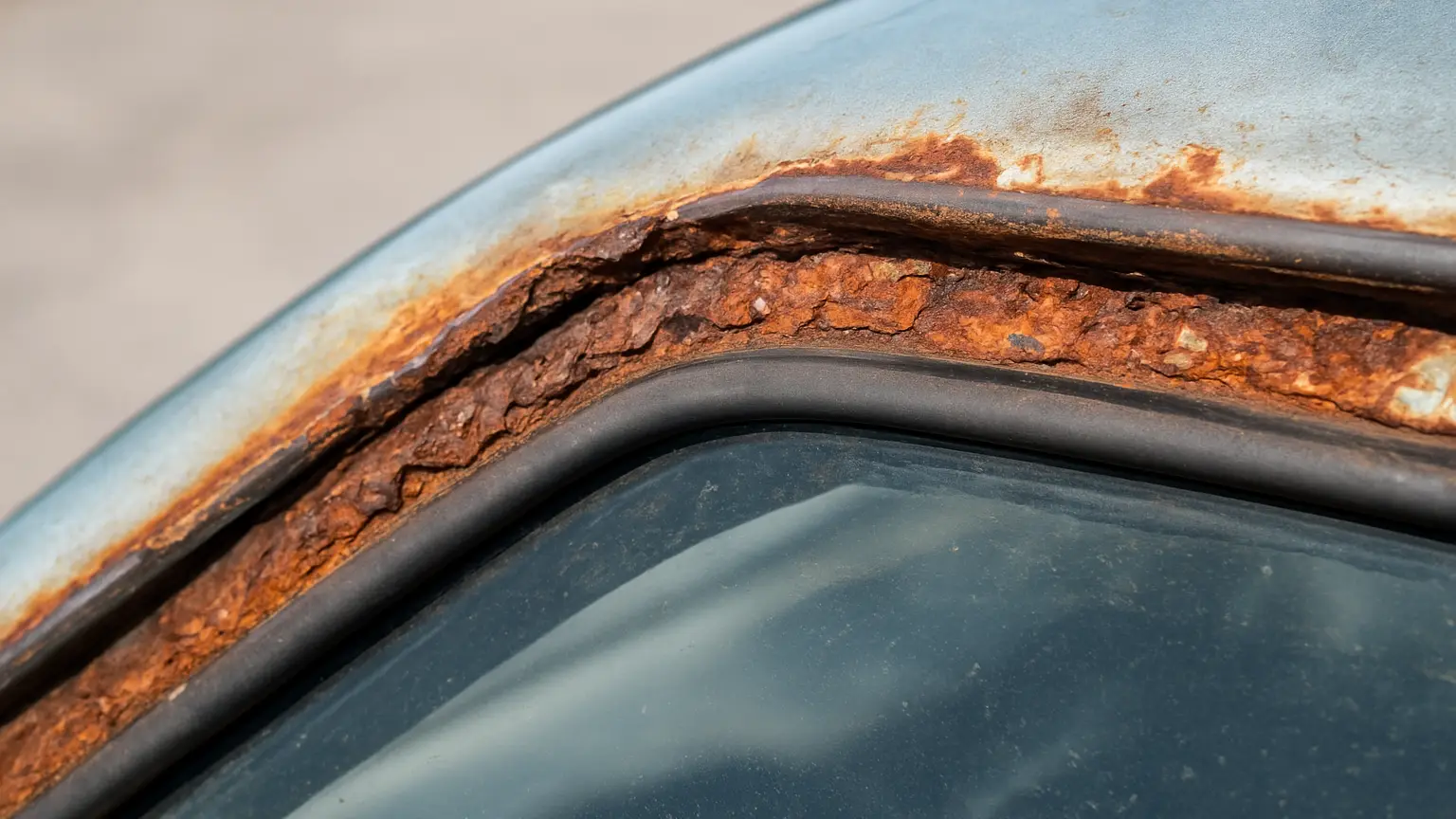
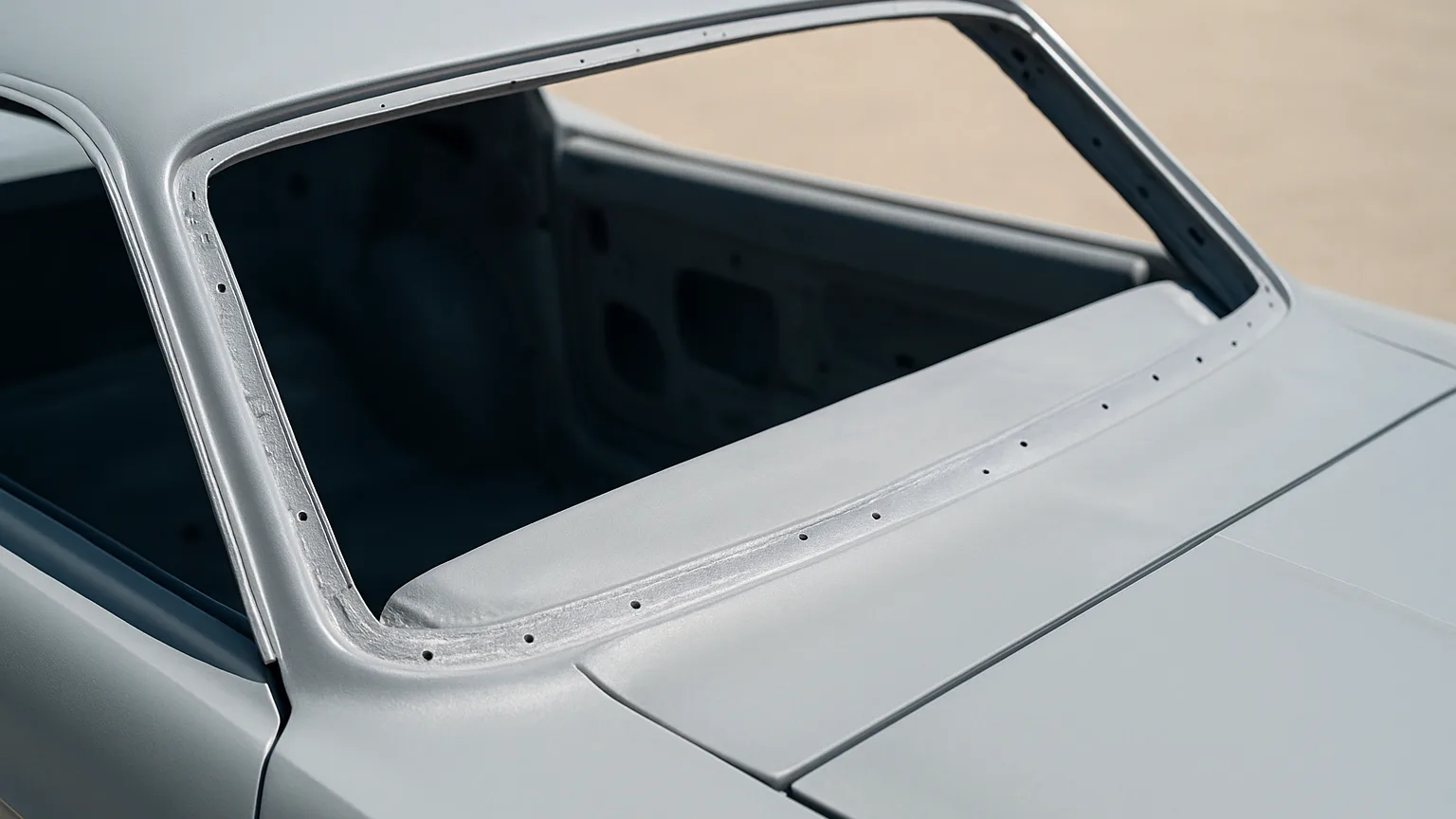
Most people think a windshield is held in place by the glass itself. It isn't. It is held by a bead of urethane glued to a thin strip of metal that runs around the opening. That strip is called the pinch weld. When it rusts, the new glass has nothing solid to grab.
This series was shaped with insights from the body repair team at Bell Road Automotive, whose work on the metal side of the opening shows why glass shops and body shops do their best work as a team. Over three parts, we follow a windshield opening from bare steel all the way to a fully calibrated car.
What the Pinch Weld Actually Does
Where two body panels meet at the edge of the opening, the factory squeezes them together and spot welds them. The result is a flat lip of metal that circles the frame. No matter what type of glass is used, the windshield rests on that lip, and the urethane locks the two together.
- It carries the bond. Urethane sticks to the painted metal, and the glass sticks to the urethane.
- It adds strength. A well bonded windshield helps the roof resist crushing in a rollover.
- It backs up the airbag. The passenger airbag often pushes off the glass, so the glass has to stay put.
- It seals out the weather. A clean, even bead keeps rain, dust and road noise out of the cabin.
This is a big part of why your windshield matters far more than most drivers realize. The glass can only be as strong as the metal under it.
Rust on the pinch weld almost always starts small. A cutting tool nicks the paint during an old glass job. A rushed install leaves bare metal with no primer. Water creeps in under a loose molding and sits there. Over months, that tiny scratch turns into scale, bubbles and pitting.
Here is the problem. Urethane cannot bond to steel through rust. It bonds to the flaky layer on top, and that layer is already letting go of the metal below. The glass may look perfect on a calm day. But in a crash, or even after enough hard potholes, the bond can peel away along with the rust.
Warning Signs Around the Glass
You can't see the pinch weld with the glass in place, but it leaves clues. Watch for these, and if you spot one, don't wait to get the opening checked:
- Water on the dash or a damp headliner after rain
- Bubbling paint along the pillars or the roof edge
- Orange stains seeping out from under the trim
- A new whistle or wind noise at highway speed
- Glass that creaks when the body twists over a driveway
Desert driving does not protect you from this. Hot days and cool nights make the body flex, and monsoon storms push water into any small gap. Body techs who spend their days on imported luxury cars in Arizona often find rust hiding under the trim of older models where a past glass job cut corners.
A good glass tech will stop the job if the pinch weld is badly corroded. That is not an upsell. It is the only safe call. Light surface spots can often be cleaned and primed right there. Deep pitting, holes or rot that runs into the seam is a different story. That is a body repair, and it has to be done before any glass goes in. On many imports with factory-specific seam sealers and bonding steps, that work is best left to imported vehicle specialists who already know those procedures.
How the Body Side Restores the Opening
Following the approach Bell Road Automotive's body team describes, a proper fix treats the opening like any other damaged panel. The steps look like this:
- Remove the glass and trim so the whole opening can be seen.
- Strip the rust down to clean steel by grinding or blasting.
- Cut out and weld in new metal where the steel is thin or holed, matching the factory shape.
- Seal the seams and add corrosion protection inside them.
- Prime and paint the flange so the urethane has a sound surface to grip.
- Let the finish cure before the glass team returns.
Why the Shape Has to Be Right
Fresh metal is not enough on its own. If the welded lip sits too high or too low, the glass won't sit at the right depth or angle. That can throw off the camera behind the mirror, which is why the order of [[RUN_LINK_3|repairs and calibration]] matters so much after any body work near the glass.
Waiting only makes the bill bigger. Rust that needs a quick prime today may need new metal next year. It is the same thinking as weighing windshield repair vs replace early: small problems are cheap, and grown problems are not.
Next Up: When Body Work Means Pulling the Glass
Rust is only one reason the glass has to come out. Roof skins, pillar damage and quarter panel repairs often mean removing the windshield, back glass or quarter glass too. Part 2 looks at why working around the glass leads to a weak, leaking seal, and how [[RUN_LINK_2|body and glass teams coordinate]] so the reinstalled glass bonds the way the factory meant it to.
Solid Steel First, Then Clear Glass
The pinch weld is a narrow strip of metal, but your whole windshield depends on it. It holds the urethane, helps the roof stay strong, backs up the airbag and keeps water out. When rust gets into that strip, the bond is only as good as the flaking layer on top, and that is never good enough.
The fix is simple to say and careful to do. Repair the metal as a real body job, restore the shape, prime it and let it cure. Then let the glass team bond new glass to clean, solid steel. Get that order right, and the windshield you trust every day will hold when it counts.