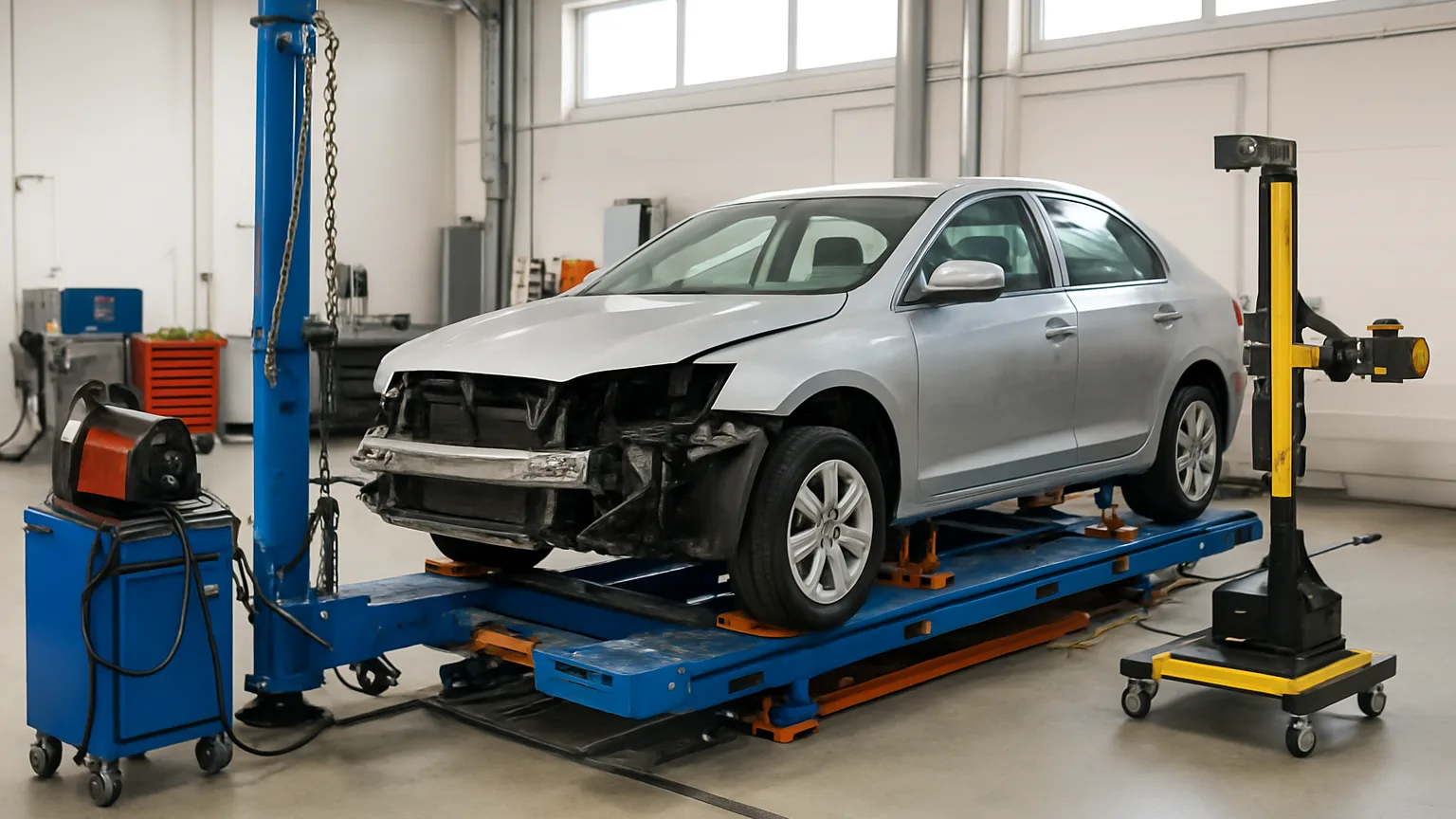
Part 2 of this series looked at pillar and roof repairs that force the glass out, and how the body tech and the glass tech share one opening. This last part looks at the whole job after a collision, where the order of the work matters as much as the work itself.
This series was shaped with input from the team at Bell Road Automotive, whose hands-on view of collision and mechanical repair helped explain how the metal, the wheels and the glass all depend on each other.
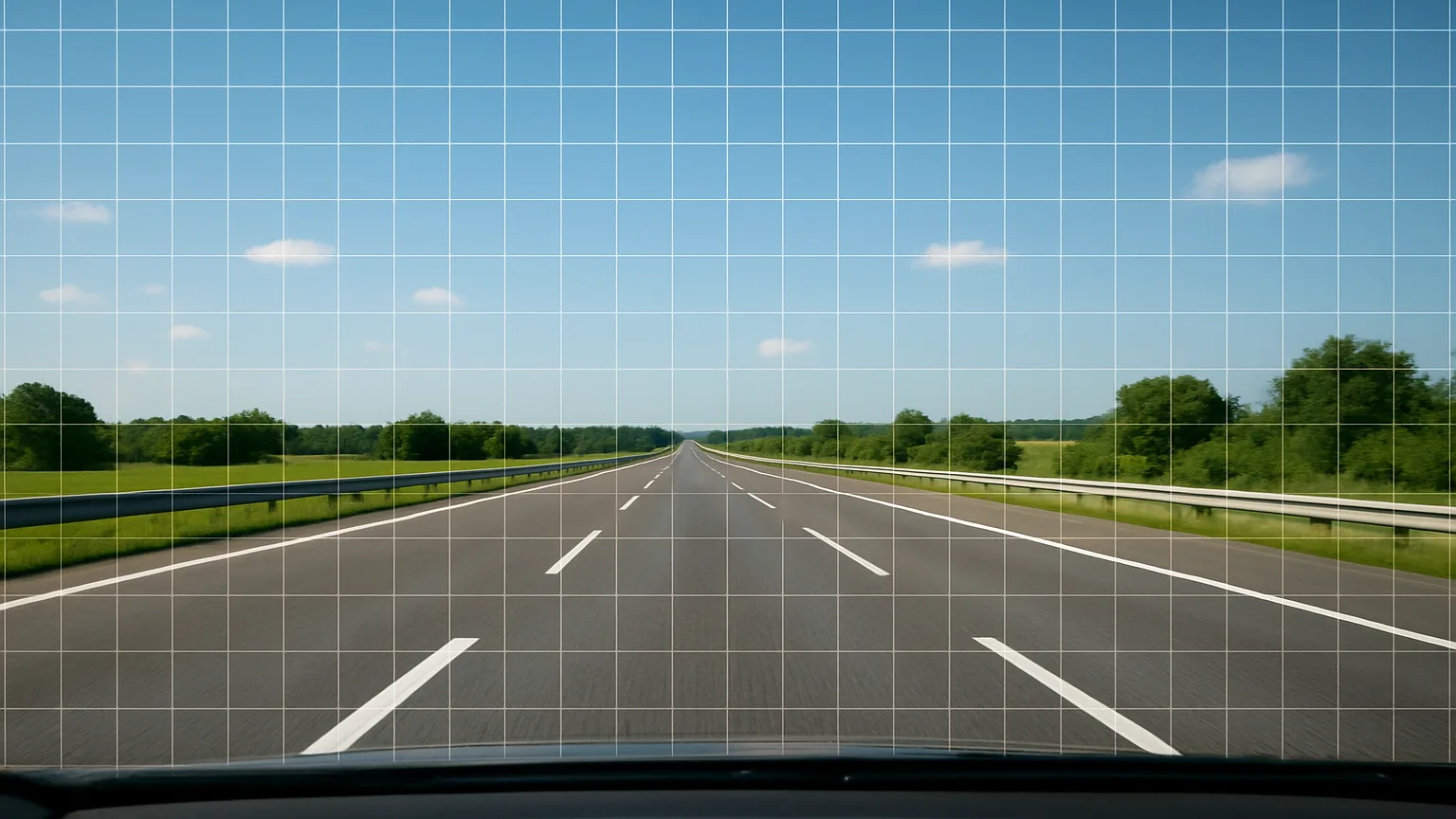
The camera behind your mirror does not see the road the way you do. It sees angles. It assumes the body is straight, the glass is set right, and the wheels point where the body points. If any one of those is off, the camera still sees a road. It just sees the wrong one.
That is why a good shop treats crash repair like a relay race. Each runner carries the baton for one leg and hands it off clean. Nobody starts early. If your car needed pillar work, the steps for [[RUN_LINK_2|glass after pillar repair]] are the second leg of this same race.
Every step builds on the one before it. If the bottom layer is crooked, everything on top leans with it.
- Structure first. The frame, rails, pillars and pinch weld go back to factory size. Techs measure key points on the body and pull the metal until it matches the specs, setting the true center line of the car.
- Glass second. The windshield bonds to that corrected opening. The camera bracket is built into the glass, so the glass has to sit exactly where the body says it should.
- Alignment third. The wheels get set to the body's center line. This sets the thrust angle, which is the direction the car really travels.
- Calibration last. The camera and radar learn where "straight ahead" is. They can only learn it right if the body, glass and wheels are already right.
Each step hands a number to the next one. Change any earlier number and the later ones are wrong. That is why calibration is not a quick add-on. It is the final check on all the work before it. Drivers comparing auto glass calibration companies should ask one thing first: will they confirm the body and alignment are done before they start?
Picture a mid-size SUV, say one of the three-row Outlander crossovers, with a light front-end hit to the bumper and one frame rail. To save a day, the shop sets the new windshield and runs calibration right away. Alignment gets booked for later in the week.
The scan tool shows a pass. But the wheels are still pointing a hair to the left from the impact. When the alignment shop fixes that, the car's real direction of travel shifts. The camera never learns about it.
Now the camera believes "straight" is a small angle off from where the car actually goes. At city speeds you may not notice. At highway speeds, a tiny error grows over the distance the camera looks ahead. Lane keeping starts to drift you toward one line. Adaptive cruise may track the wrong car in a curve. Emergency braking may react late, or brake for a car in the next lane.
The same thing happens if the body is still slightly out of shape when the glass goes in. The bracket sits a little high or a little twisted, and no calibration target can fix a camera that is mounted wrong. It can only teach a bent camera to see a bent road.
Radar has the same weakness. Many front radar units sit behind the bumper or grille on brackets that bend in even small hits. Shops that often service compact crossovers with camera packages, such as Outlander and Eclipse Cross models, see this regularly: the body looks perfect, yet the sensor mount is a few degrees off until it is measured. Bell Road Automotive's view is that alignment and suspension are where these hidden errors hide most often after a crash, with the geometry underneath still carrying the hit.
Questions Worth Asking at Pickup
You do not need to be a tech to protect yourself. A few plain questions tell you if the relay was run in order.
- Was the body measured after repair, and can I see the report?
- Was the pinch weld cleaned or fixed before the new glass went in?
- Was the alignment done before the camera was calibrated?
- Was it a static calibration, a road calibration, or both?
- Do I get a printout showing the calibration passed?
If the answer to the pinch weld question is unclear, it helps to know why [[RUN_LINK_1|rust in the opening]] has to be fixed as metalwork first. A bond on weak metal throws off every step that follows.
Some drivers also wonder about windshield repair vs replace when the glass only has a small chip. If the body was pulled near the opening, replacement is often the safer choice, since the glass has to come out for the metal work anyway.
The Road Ahead Starts With the Right Order
This series started with rust in the narrow strip of metal under the glass, moved to the pillar and roof jobs that pull the glass out, and ends here, with the full relay of structure, glass, alignment and calibration, each one handing a true number to the next.
Driver-assist systems are only as smart as the car they ride in. When the steps run in order, the camera sees the road you see and reacts the way it should. When a step jumps ahead, the car looks fixed but quietly reads a different road. Ask the questions, check the paperwork, and make sure your repair team runs every leg in its turn.